The 14th International Conference on Sustainable Energy Engineering and Application 2027 (ICSEEA 2027) is a premier international forum that brings together researchers, policymakers, academics, practitioners, and industry leaders to exchange knowledge, present pioneering research, and build collaborative strategies toward sustainable industrial transformation. Organized by the Research Organization for Energy and Manufacture (OREM) under the National Research and Innovation Agency (BRIN), ICSEEA 2027 will be held on 2–3 February 2027 in a hybrid format, combining online and onsite presentations, with the conference and professional development workshops taking place in Bali, Indonesia. Under the theme “Synergizing Sustainable Manufacturing Innovation, Energy Transition, and Environmental Decarbonization in Industrial Resilience,” this year’s conference emphasizes the integration of scientific inquiry, actionable policy, and industrial practice to support a resilient, inclusive, and decarbonized global future.
The conference is structured around three principal areas of inquiry: Smart and Sustainable Manufacturing, Green Supply Chain and Process Technology, and Resilience in Renewable Energy Transition. These areas examine the integration of automation, robotics, additive manufacturing, green process engineering, industrial decarbonization, waste-to-resource innovation, sustainable logistics, smart grids, energy storage, electric vehicle infrastructure, and advanced fuel technologies within contemporary industrial systems. By situating these topics within the broader framework of industrial resilience, ICSEEA 2027 aims to strengthen the connection between scientific research, technological innovation, policy formulation, and practical implementation, thereby contributing to the development of sustainable, low-carbon, and adaptive industrial ecosystems.
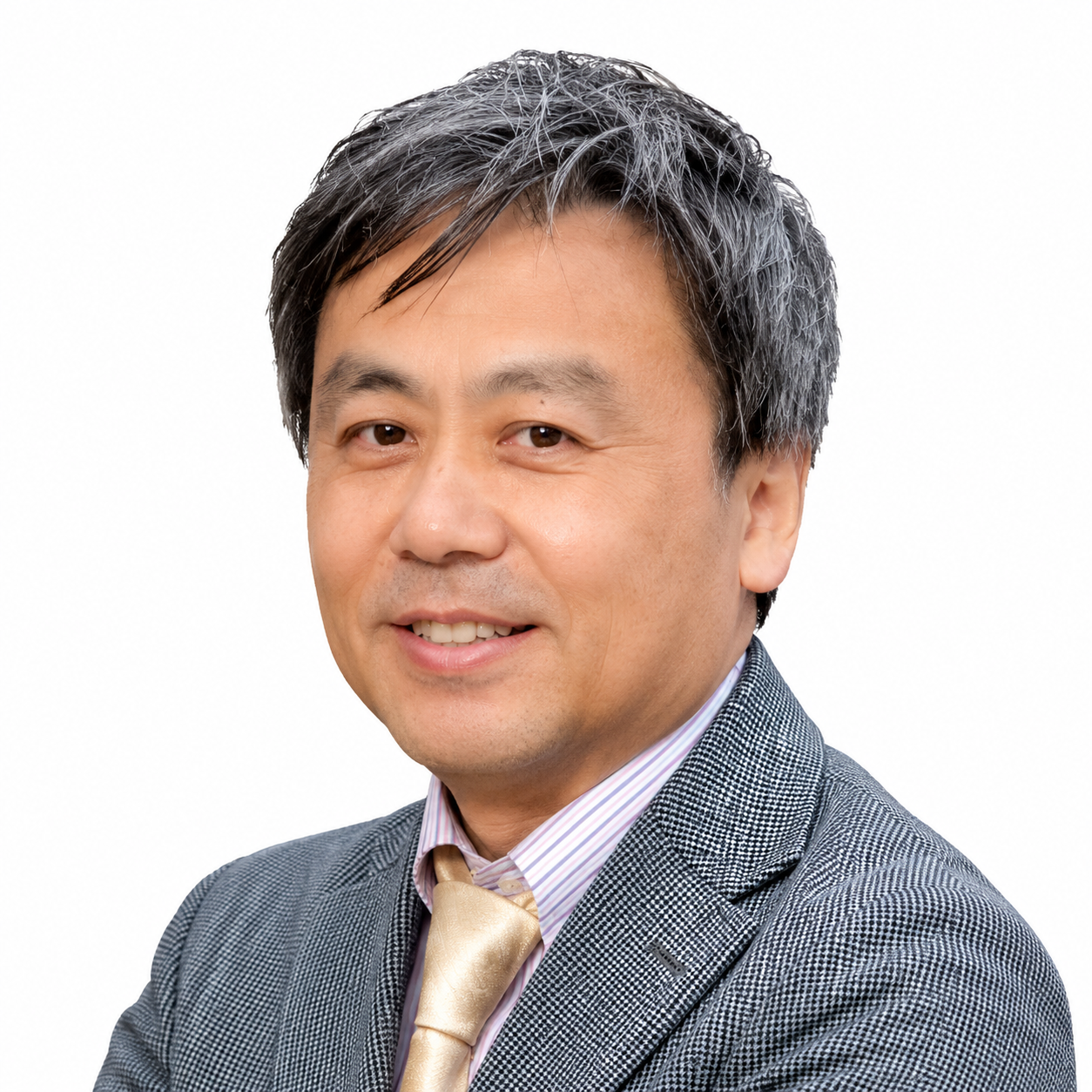
Prof. Park Hyung-Suck, PE – University of Ulsan*,
Prof. Hung-Suck Park, P.E. is an Emeritus Professor at the University of Ulsan, Republic of Korea, with expertise in environmental engineering, eco-industrial parks, industrial symbiosis, circular economy, carbon neutrality, waste management, and sustainable industrial systems. He is listed by the University of Ulsan as an emeritus professor in environmental engineering, while academic profiles identify him as a Ph.D. and Professional Engineer affiliated with the Department of Civil and Environmental Engineering. His scholarly work has addressed key areas such as environmental impact and sustainability, recycling and waste management, sustainable industrial ecology, energy–environment–economic growth relationships, sustainable supply chain management, pollutant removal, and municipal solid waste management. Through his research on eco-industrial park development, carbon-neutral industrial systems, and resource-efficient environmental management, Prof. Park contributes to advancing practical and policy-relevant solutions for sustainable industrial transformation and low-carbon development.
Prof. Ryozo Noguchi – Kyoto University*
Prof. Ryozo Noguchi is a Professor at the Graduate School of Agriculture, Division of Environmental Science and Technology, Kyoto University, with expertise in agricultural environmental and information engineering, biomass resource utilization, life cycle assessment, and sustainable biobased systems. His research focuses on biomass energy utilization and environmental impact assessment, particularly in Southeast Asia; energy and environmental evaluation of food production systems; carbon sequestration through biomass combustion; smart biomass combustion technologies; and pesticide sensing and smart application technologies. Through his work, Prof. Noguchi aims to address technical challenges in designing sustainable biobased societies by integrating advanced technologies, environmental assessment, agricultural food production systems, and intergenerational ethics to support improved livelihoods and a healthier global environment. His research interests include agri-biocircular systems engineering, energy resource utilization, process analysis, life cycle assessment, bio-based society development, and smart technologies for pesticide application.
Prof. Liang Dong – City University of Hongkong*
Prof. Liang Dong is a Professor at the School of Energy and Environment, City University of Hong Kong, whose interdisciplinary research focuses on urban sustainability, sustainability science and policy, circular economy, ESG, net-zero and carbon neutrality policy analysis, sustainable industrial systems, and urban planning. He obtained his B.E. in Environmental Engineering from Tsinghua University and his Ph.D. in Urban Environmental Studies from Nagoya University, and has conducted international collaborative research using advanced spatial and data-driven techniques to address complex sustainability challenges. His work contributes to the design of sustainable human–techno–environmental systems, eco-industrial development, low-carbon urban transitions, and policy strategies that support resilient, inclusive, and environmentally responsible development.
Prof Ma Wei – NTU Singapore*
Prof. Ma Wei is a researcher at Nanyang Technological University (NTU), Singapore, whose work focuses on the molecular mechanisms and gene regulatory networks underlying plant oil biosynthesis. His research investigates how plants accumulate oil in the form of triacylglycerol (TAG), particularly in seeds, as an essential source of carbon and energy for seedling development, as well as its broader importance for human nutrition and renewable industrial feedstock. Through the Ma Lab, he employs multidisciplinary approaches to examine transcription factors, post-translational modifications, interacting partners, and regulatory domains associated with oil biosynthesis, with particular emphasis on WRINKED1 (WRI1) as a key regulator. His research also explores combinatorial transcriptional regulation of fatty acid biosynthesis in oil crops, molecular mechanisms of seed and fruit development, and related areas such as plant lipid biosynthesis, gene expression regulation, intrinsically disordered proteins, plant signal transduction, and crop improvement for agro-economic benefit.
Prof. Martin Anda – Murdoch University*
Prof. Martin Anda is an environmental engineer at Murdoch University, Australia, with more than 30 years of experience across the energy, water, and construction sectors. After completing his Bachelor of Engineering in Mechanical Engineering at The University of Western Australia, he worked with consulting engineering firms on major industrial energy projects before spending 15 years supporting remote Indigenous communities across Australia and developing countries, during which he also completed his PhD. At Murdoch University, he has served as Research Manager, Director of the UNEP Environmental Technology Centre, and Chair of the Environmental Engineering undergraduate program. He is currently the Theme Leader for Circular Economy at the university’s Harry Butler Institute, where he supervises postgraduate researchers and leads industry-focused projects related to renewable energy, water, waste, and circular economy practices across Australia and Indonesia. As a Research Fellow with the Indo-Pacific Research Centre, Prof. Anda is also involved in water and energy transition projects across Asia, including low-carbon construction materials and nature-positive water management in Indonesia, Indigenous-owned renewable hydrogen logistics in the Pilbara, low-carbon geopolymer concrete manufacturing in Western Australia, and digital water services for homeland communities.
Prof. Martin de Jong – Rotterdam EU*
Prof. Dr. W.M. (Martin) de Jong is the Scientific Director of the Erasmus Initiative “Dynamics of Inclusive Prosperity” at Erasmus University Rotterdam, where he also serves as Professor at the Erasmus School of Law and Rotterdam School of Management, in addition to holding a part-time professorship at Fudan University in Shanghai. With 25 years of international experience in research, education, and entrepreneurship, his work focuses on public policy, governance, decision-making, urban studies, infrastructure development, sustainable urban development, city branding, corporate social responsibility, and cross-cultural management. He holds a master’s degree in Public Administration from Erasmus University Rotterdam and Leiden University, and a PhD in Systems Engineering and Policy Analysis from Delft University of Technology. Throughout his career, he has held academic and advisory roles across leading universities, government institutions, cities, and international organizations, contributing significantly to debates on inclusive governance, stakeholder representation, and sustainable urban and infrastructural development.
* : to be confirmed
| Call For Paper | June 4th, 2026 |
| Submission Deadline | August 30th, 2026 |
| Acceptance Notification | November 6th, 2026 |
| Normal Registration | XX XXXXXXX, 2026 |
| Camera Ready | X XXXXXXX 2027 |
| Registration Deadline | X XXXXXXX 2027 |
| Conference Date | February 2nd – 3rd, 2027 |
| Proceeding Production & Submission | 2027 |
| Publication to XXXX | 2027 |
📌 Important Notes
Full Paper Template ICSEEA 2027 here
According to XXXXX policy, each paper must be presented by one author of the paper. Therefore, if your paper is accepted, one of the authors is required to register and present their paper at the ICSEEA 2027 conference.
Important! Please take note that XXXXX has a strict policy on no-show. Papers with no-show participants without a valid reason will not be submitted to XXXXX. No refund of the paid fees may be claimed by the no-show author.
1. Smart and Sustainable Manufacturing
1.1 Industry 5.0
1.2 Advance Machinery
1.3 Structural, Material Strength, Construction Engineering, and Management
1.4 Industrial Automation and Robotics
1.5 Additive Manufacturing
2. Green Supply Chain and Process Technology
2.1 Waste-to-Resource
2.2 Sustainable Logistics and Resilient Transportation
2.3 Maritime Engineering and Hydrodynamics
2.4 Industrial Decarbonization
2.5 Green Process Engineering
3. Resilience in Renewable Energy Transition
3.1 Smart grid & energy storage
3.2 Advanced Fuel Technology
3.3 Energy Conversion & Heat Transfer
3.4 Net-Zero Emission Energy System
3.5 Electric Vehicle (EV) Technology and Infrastructure
Details about the final paper submission, payment, and registration procedures will be communicated to the authors of accepted papers. It’s important to regularly check your email for updates.
The ICSEEA 2027 conference offers various registration fee options, which include:
| Category | Online | Offline | ||||||
Regular | Regular | |||||||
| Presenter | Rp | US$ | Rp | US$ | ||||
| Professional | 3.450.000 | 210 | 3.750.000 | 230 | ||||
| Student/XXXX Member/PPI Member | 3.000.000 | 190 | 3.300.000 | 205 | ||||
| Non-Presenter | ||||||||
Participant | 500.000 | 35 | 1.000.000 | 70 | ||||
*** To be eligible for the reduced registration fee for students, the first author of a paper must be a student. The registration fee applies only to the first author, while any of the authors listed in the accepted paper can be the presenter. It is mandatory to upload a proof of student status, such as a scanned image or PDF of the student ID card, along with proof of payment, into the designated form.
As a Presenter
Here are the registration procedures for presenters:
The proof of payment should be sent via: [Author Registration]
As a Participant (non Presenter)
For those who are interested in attending the conference as participants (non-presenters), please follow these steps:
Should you require more information about the conference, please contact us at icseea2027@brin.go.id or texting by WhatsApp at phone-number: +62 852-1990-1107
BRIN Kampus Gatot Subroto
Gedung Sasana Widya Sarwono
Jl. Gatot Subroto No.10, Jakarta, Indonesia 12710
Click to watch Jakarta Tour Video
How to get the Venue
The conference will take place at the National Research and Innovation Agency (BRIN), located at Jl. Gatot Subroto No. 10, Central Jakarta, a strategic area in the heart of Indonesia’s capital city. The venue is well-connected and easily accessible via various modes of transportation, both from within Jakarta and from other major cities. For international and domestic participants arriving at Soekarno-Hatta International Airport (CGK)—commonly referred to as Cengkareng and served by major airlines worldwide—several convenient routes are available to reach BRIN Gatot Subroto.
Upon arriving in Jakarta via any of the aforementioned transportation options, participants may conveniently reach their accommodation or the conference venue by using a taxi or online transportation services such as GoCar or GrabCar, both of which are widely available throughout the city.
The conference venue is located at the National Research and Innovation Agency (BRIN), Jl. Gatot Subroto No. 10, Central Jakarta — a strategic location within the capital’s main business district.
A wide range of accommodation options is available in the surrounding area, from budget hotels to upscale establishments. Reservations can be made through the following online platforms:
Hotel Kartika Chandra (within walking distance)
The Sultan Hotel & Residence Jakarta
Aryaduta Suite Semanggi
HARRIS Hotel Tebet Jakarta
Gran Meliá Jakarta (approx. 10–15 minutes by car)
Email:
icseea2027@brin.go.id
Phone:
Agusta (+62 852-1990-1107) /
Hanifah (+62 822-4212-4211)
Organizer:

Co-organizer:

Sponsor:
Publisher Partner: